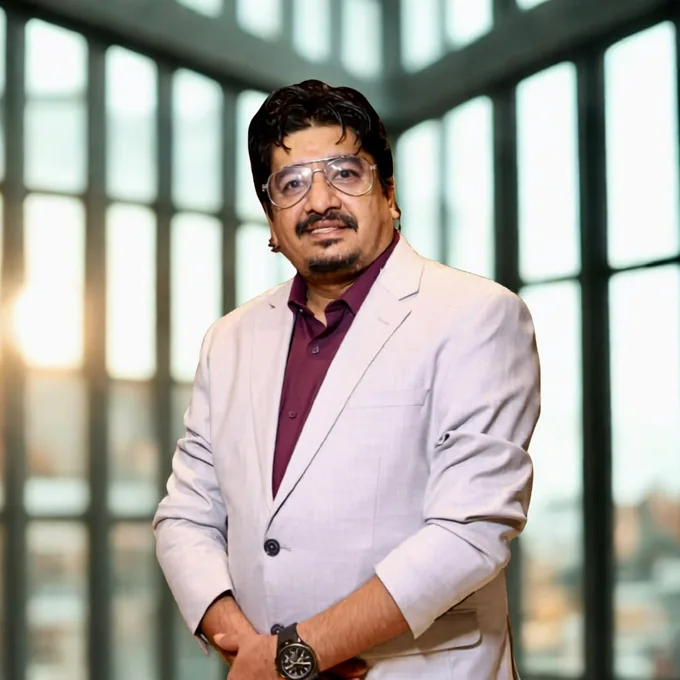
Solutions Architect, Chief Data Office · Data Governance · Data Engineering · AI Governance
Fifteen years turning messy enterprise data into something people — and now AI agents — can
actually trust and act on. I work at the join between governance, engineering, analytics and
architecture, because that is exactly where the value hides.
Pune, Maharashtra, IndiaOn-site · Hybrid · RemoteIndia · Europe · US teams
Four disciplines around a single centre. Governance, engineering, analytics and AI are usually run as
separate programmes — the value shows up exactly where they meet. Node size shows depth; the outer ring
is the leadership layer that holds the four together. Hover any node, or filter by discipline.
Focus
Core — daily, hands-on Strong — regular delivery Working — applied on projectsEvery capability below is backed by shipped work — see open source and experience.
What I do
Four disciplines, one problem.
Each one is a job on its own. Run together, they are the difference between a number you can defend and a number you argue about.
Data engineering & platforms
Pipelines that are safe to re-run at 3am. Incremental ingestion with watermarks, SCD Type 2, declarative quality gates, and lakehouse foundations across Snowflake, Databricks and Microsoft Fabric — federated with Starburst/Trino where the data cannot move.
PySpark
Snowflake
Databricks
Fabric / OneLake
Data Vault 2.0
Python · Alteryx
Data governance that operates
Federated ownership, stewardship and data products with named owners and SLAs. Councils that decide, working groups that execute. Glossary, lineage and quality wired through Collibra with the teeth to stop a load — not living in a slide deck.
Collibra
DAMA-DMBOK
Data quality
Lineage · Metadata
MDM
CDO operating model
Business intelligence at scale
Certified data sources, standardised KPIs, row-level security and tuned extracts — governed self-service instead of conflicting numbers. Plus the unglamorous half: administering a 500+ workbook estate, rationalising it, and migrating legacy Cognos and Excel onto something maintainable.
Tableau Cloud · Server
Tableau Pulse
Power BI
Semantic layer
Row-level security
TabPy · Hyper API
Agentic AI, governed
Agents built in Agent Studio with Prompt Builder — topics, actions and guardrails — grounded through Data 360 over Snowflake, so leadership can ask a question in plain language and get an auditable answer. An agent is exactly as trustworthy as the certified datasets, entitlements and lineage beneath it.
Agentforce
Data 360
Grounding · RAG
Responsible AI
Einstein Trust Layer
Evaluation harnesses
“Every organisation wants AI agents acting on its data. Very few have data an agent should be trusted with. The unglamorous work — ownership, stewardship, quality rules, lineage — is suddenly the thing that decides whether AI helps or quietly multiplies your existing errors.”
— and the reason all four disciplines above are one job, not four.
How it fits together
The layer under the dashboard.
Three diagrams for the three questions I get asked most: what does the platform look like, who is actually accountable, and how did someone end up doing all four of these things.
Reference architecture — governed data foundation to agentic consumption
The shape I build towards. Note where governance sits: not a stage in the pipeline, a rail underneath all of it. That is the whole argument.
Built in anger across asset management, banking and manufacturing estates. The five-box row is the part everyone draws; the blue rail is the part that decides whether any of it survives an audit.
The trust chain — who is actually accountable
Governance thrives when roles are genuinely defined. Owners, stewards, custodians and consumers each hold a distinct piece; when one is vacant, the chain breaks there and only there.
The five-pillar framework I presented at a governance forum — people, data, data stores, processes, governance — turns on exactly this. The point that landed hardest with that audience: governance thrives when roles are genuinely defined.
Fifteen years, one direction of travel
Each layer starts when I moved into it and then just keeps going. The direction of travel is downward — analysis and visualisation first, then analytics, then the engineering, architecture and governance underneath them — but nothing above ever gets handed back.
Not one of these has ever been handed back. I still gather the requirements and build the dashboard, still write the pipeline, still sign the architecture — which is the whole argument for one person holding governance, engineering and BI at once rather than passing a number between three teams and hoping. The through-line has not changed in fifteen years: make the number defensible, then make it easy.
Experience
Fifteen years, nine roles.
From Tableau developer to Chief Data Office. The titles changed; the job — making data trustworthy enough to decide on — did not.
Defining target-state BI and data architecture, turning business and regulatory requirements into governed, decision-ready reporting. Solutions Architect working deep in the Salesforce ecosystem.
Built the “House of Data” governance-reporting layer — one consistent view of KPIs, ownership and delivery across the CDO
Delivered certified Tableau dashboards and standardised KPIs for senior risk, controls and investment stakeholders
Piloting Agentforce agents grounded via Data 360 over Snowflake for auditable, natural-language governance answers — the pattern is open-sourced in governed-ai-grounding
Architected governed foundations across Azure, Microsoft Fabric and Snowflake, federated with Starburst/Trino and integrated with Collibra
Governed Tableau architecture, migration and reporting for asset management, banking, healthcare and product-engineering clients — each engagement run end to end.
Owned the full BI lifecycle for global supply chain and procurement in Emerson's Core Data Analytics CoE.
Delivered 150+ Tableau dashboards globally as Data-as-a-Service with reusable governed sources
Administered global Tableau Server — 500+ workbooks, 80+ extracts, migrations and tuning
Governance, MDM and anomaly monitoring that helped identify $20M in supply-chain savings
Modelled SAP procurement data — purchase orders, goods receipts, vendor master; the Data Vault treatment is public as sap-data-vault-2
Built a live global ports & shipping-routes command centre during COVID-19 — Python and REST-API pipelines feeding real-time route recommendations across sea, air and land
Led and mentored the BI developer team; set the CoE's reporting and governance standards
Tableau trainer and developer building dashboard capability for customer-experience programmes.
Delivered Tableau training and enablement, raising design standards across analyst and developer teams
Customer-satisfaction and sentiment analytics on Teradata for service-recovery programmes
Jan 2012 — Jul 2015
Tableau Developer / Business Analyst
DenuoSource India
Hyderabad, India · On-site
Retail and pharma analytics for Walmart and Office Depot.
Migrated 25+ Cognos reports to Tableau on Teradata with managed refreshes and permissions
Python dynamic reports tracking competitor price indices to drive dynamic pricing
Loyalty, customer-segmentation and market-basket analytics with store-traffic prediction
Jan 2011 — Dec 2011
Freelance Data Analyst
GateForum
Jabalpur, India · Remote
Market and competitor research in the equity crowdfunding sector — SWOT analysis, survey design and insight-driven recommendations that shaped early-stage investment approaches.
Certifications
Credentials in active use.
Each of these maps to something on the job — not collected for the wall. Badge artwork is the real credential where I hold it. Cards link to the issuing programme; the Microsoft credential links to my verified transcript.
Data platforms are only as good as the domain understanding behind them.
🏛 Asset & investment management
CDO reporting, AUM and net-flow metrics, mandate and benchmark data, investment-risk and controls reporting, regulatory (FED) submissions.
🏦 Banking & credit risk
Credit-card and corporate credit-risk estates — exposure, delinquency, vintage, loss forecasting and portfolio-risk reporting.
📦 Procurement & supply chain
Purchase-to-pay and SAP procurement data, inventory, logistics, vendor performance and on-time-delivery analytics.
🛒 Retail & omnichannel
Market-basket analysis, cross-sell and loyalty segmentation, competitor price indices for dynamic pricing, store-traffic prediction.
🛡 Insurance
Policy and claims analytics, predictive risk modelling from claim, location and climate data.
⚡ Healthcare, energy & telecom
Revenue, cost and margin dashboards; operational and smart-meter style data; network and customer-experience reporting.
Open source
Everything above, in runnable form.
Eight reference implementations of the patterns on this page. All of it was executed before it was published —
the pipelines run, the tests pass, and the numbers in each README came from a real run rather than an estimate.
Clone any of them and run pytest.
8 public repositories · ~40,000 lines · 255+ tests passing · MIT licensed github.com/aniketdwivedi7388
Three of these reproduce failure modes I have actually hit and fixed. Reproducing a bug is worth more than describing one —
and it is the fastest way for you to check whether I know what I am talking about.
Knowledge base
What I'm learning, in the open.
I keep a running, structured record of every session of the cloud and data-engineering programme I'm
working through — appended into living documents rather than scattered files, so it stays readable
end to end. Below is the map of it. Where a topic is worth proving, it becomes a repository.
18Sessions captured
24Hours of material
7Topic areas
282Teaching points
64Diagrams drawn
73Pages of notes
Running record — last session 10 August 2026. Each area lists the sessions behind it.See what became code →
Writing & speaking
Thinking out loud.
Selected pieces on governance, BI and the agentic era — with the reach they earned. Published on LinkedIn, where I also post most weeks.
“Agents are only as trustworthy as the data beneath them. Ingest high-quality, well-governed data and the agentic layer becomes genuinely reliable. Skip that foundation, and you've simply automated your data problems.”
— from the modern data architecture series
Get in touch
Let's talk data.
Open to conversations on data governance, data engineering, BI leadership, AI governance and enterprise data architecture — roles, advisory work, collaboration or speaking.